Struggling with cluttered closets and wrinkled clothes that never stay organized?
For busy New Jersey professionals, mastering how to fold clothes for closet storage can transform chaotic wardrobes into efficient, space-maximizing systems.
✓ Maximize Every Square Inch of Space
✓ Professional Organization Techniques
✓ Custom Storage Solutions Available
Between demanding work schedules and family commitments, New Jersey professionals often find themselves battling the same closet storage challenges: clothes that won’t stay folded, drawers that won’t close, and the daily frustration of finding wrinkled garments buried under piles of unfolded laundry.
The solution isn’t just buying more storage containers or attempting complex organizational systems that fall apart within weeks.
Professional folding techniques, combined with strategic storage planning, can revolutionize how to fold clothes for closet storage while maximizing every available inch in your bedroom, walk-in closet, or reach-in wardrobe.
Why Proper Folding Techniques Matter for Closet Storage
Most people learn to fold clothes haphazardly, resulting in bulky, unstable stacks that topple over and create more work than they save.
Professional organizers and custom closet designers understand that effective folding serves three critical functions: space optimization, garment preservation, and visual organization.
When clothes are folded correctly, they occupy 40-60% less space than hanging garments, allow for better inventory visibility, and maintain their shape and quality longer.
The KonMari Method: Space-Saving Folding Fundamentals
The foundation of efficient closet storage lies in vertical folding techniques.
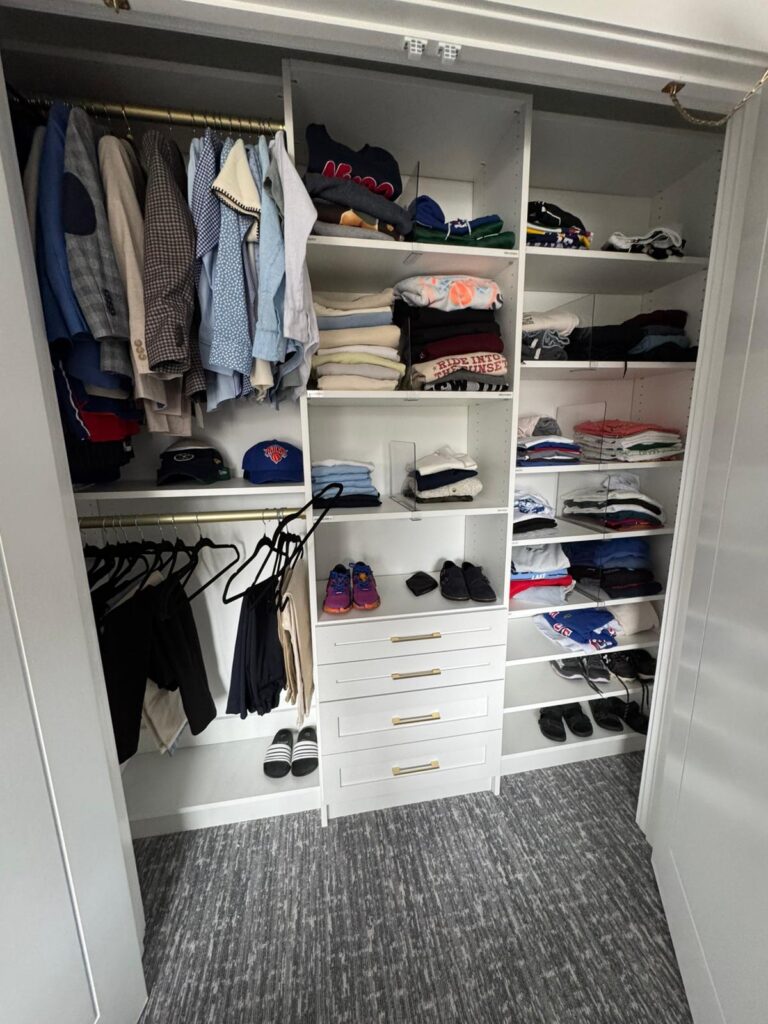
Unlike traditional horizontal stacking, vertical folding creates compact rectangles that stand upright in drawers and shelves, allowing you to see every garment at a glance.
Start with a flat surface and smooth out wrinkles before folding.
The key is creating consistent, uniform shapes that stack efficiently and remain stable when stored in pull-out drawer systems.
Basic Vertical Folding Steps:
- Lay garment face-down on flat surface
- Fold sleeves inward to create straight edges
- Fold in half lengthwise if needed for width
- Fold horizontally into thirds or quarters
- Create a compact rectangle that stands upright
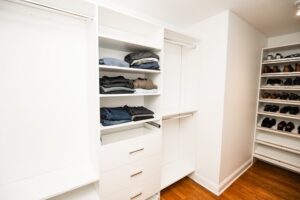
This method works particularly well when combined with custom drawer organizers and pull-out storage systems that accommodate the specific dimensions of folded garments.
Garment-Specific Folding Strategies for Maximum Space
Different garment types require specialized folding approaches to maximize closet storage efficiency.
T-Shirts and Casual Tops: Use the vertical fold method, creating rectangles approximately 4 inches wide that fit perfectly in standard drawer organizers.
Dress Shirts: Fold along natural crease lines, button up, and store vertically to prevent wrinkles and maintain collar shape.
Sweaters and Knitwear: Always fold rather than hang to prevent stretching, using acid-free tissue paper between folds for delicate items.
Jeans and Heavy Pants: Fold in half lengthwise, then in thirds horizontally for compact storage in deep drawers.
Professional Tips for Specific Items:
- Underwear and Socks: Roll into compact cylinders for small compartment storage
- Activewear: Fold moisture-wicking fabrics loosely to maintain breathability
- Delicate Items: Use the “bundle wrapping” method with tissue paper layers
- Bulky Items: Vacuum-sealed storage bags for seasonal rotation
The key is matching your folding technique to both the garment type and your specific storage system dimensions.
Drawer Systems That Maximize Folding Efficiency
Even perfect folding techniques fail without proper drawer organization systems.
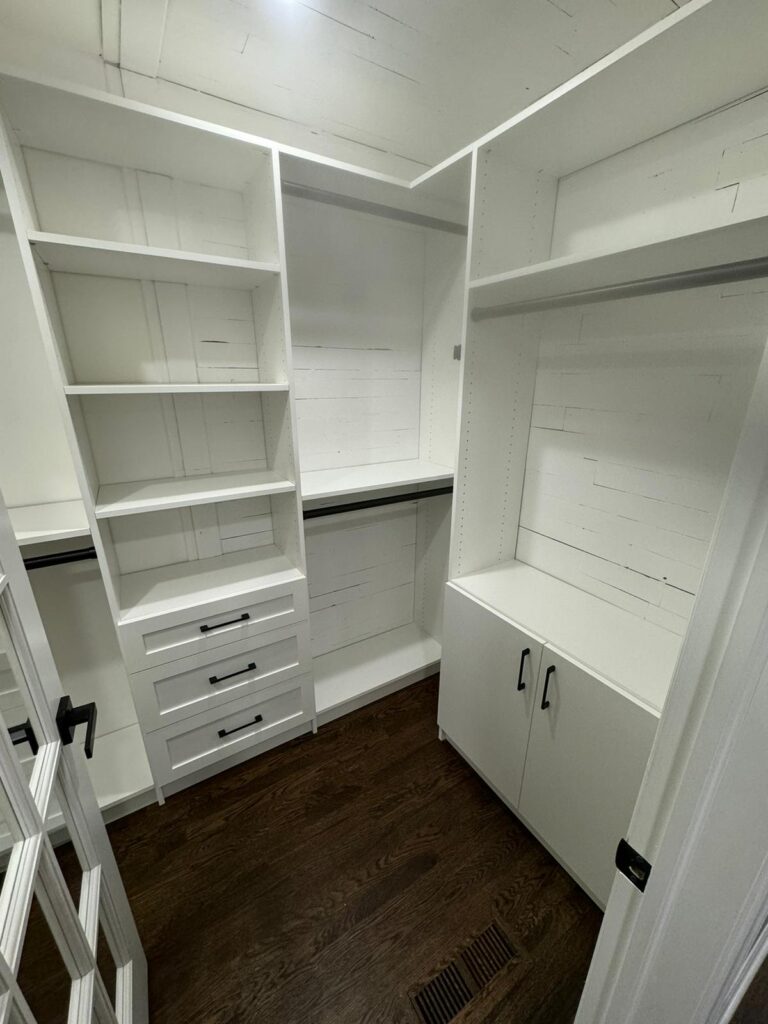
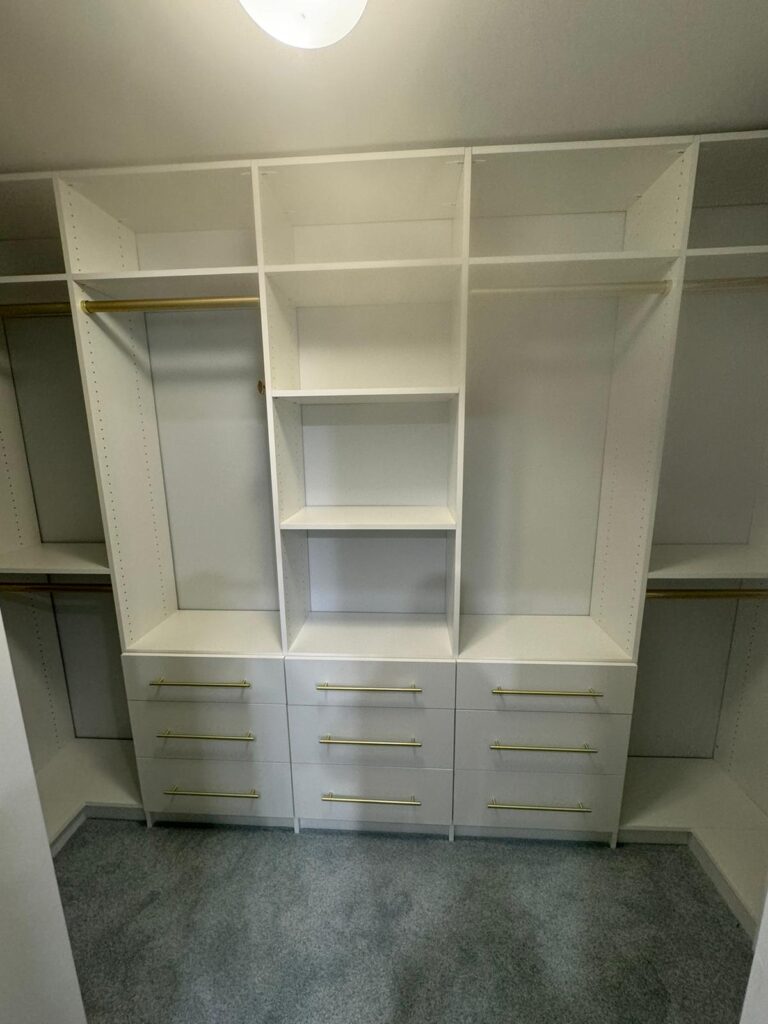
Professional storage solutions feature adjustable drawer dividers, varying depths for different garment types, and soft-close mechanisms that prevent jarring movements that disrupt folded stacks.
Quality drawer systems include features like full-extension slides for complete access, integrated lighting for visibility, and premium hardware that maintains smooth operation over time.
Custom drawer heights can accommodate everything from thin undergarments to bulky sweaters without wasted vertical space.
Essential Drawer Organization Components:
- Adjustable Dividers: Create custom-sized compartments for different folded items
- Shallow Drawers: Perfect for underwear, socks, and accessories (3-4 inch depth)
- Medium Drawers: Ideal for t-shirts, dress shirts, and lightweight pants (6-8 inch depth)
- Deep Drawers: Accommodate bulky sweaters, jeans, and seasonal items (10-12 inch depth)
- Jewelry Inserts: Velvet-lined compartments for valuable accessories
The most effective systems combine multiple drawer depths within the same closet unit, creating specialized storage zones for different types of folded garments.
Professional Storage Solutions That Eliminate Folding Challenges