
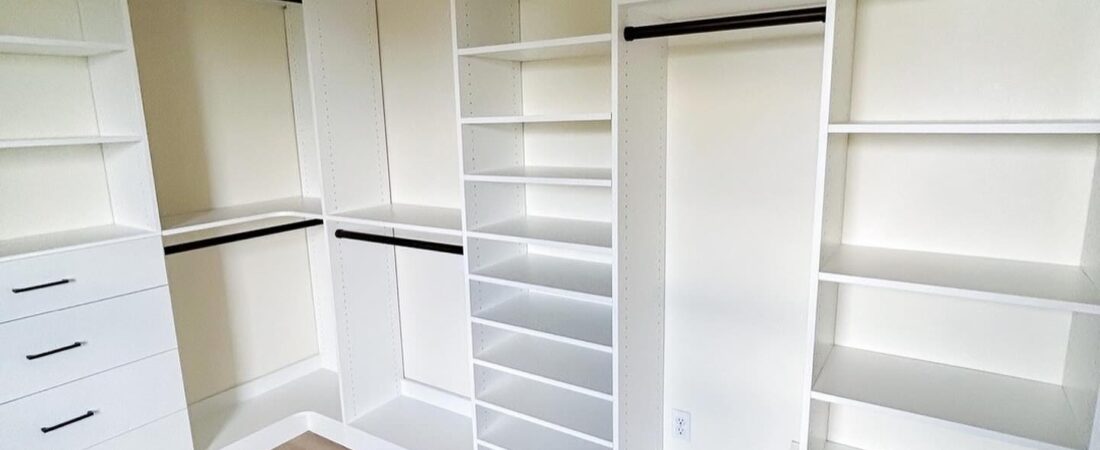
Planning a closet renovation without accurate measurements is like building a house without a blueprint—you’re setting yourself up for costly mistakes, wasted materials, and storage solutions that simply don’t fit your space or lifestyle.
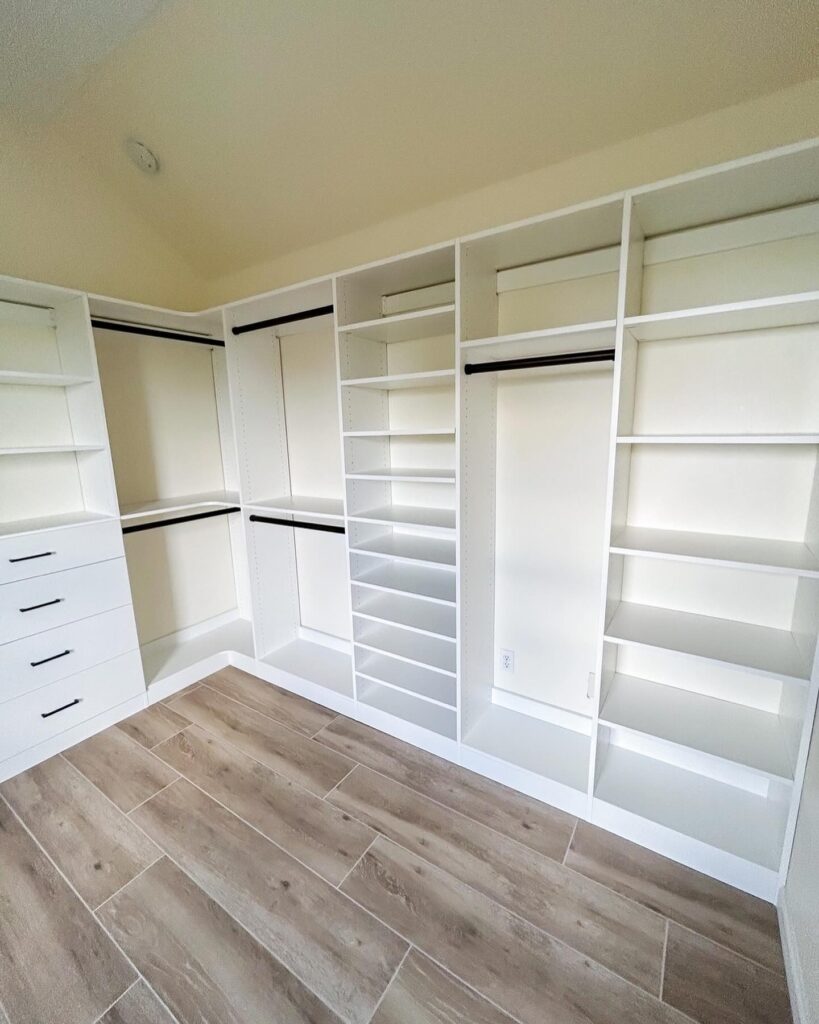
Professional measuring is the foundation of every successful closet renovation.
At Coastal Closets, we’ve seen too many New Jersey homeowners make expensive mistakes because they underestimated the importance of precise measurements in their closet renovation planning.
✓ Vetted In-House Contractors
✓ Professional-Grade Measuring Tools
✓ 3D Design Planning Included
✓ Avoid Costly Installation Mistakes
Whether you’re renovating a reach-in closet in your Bergen County home or planning a luxury walk-in closet transformation in Monmouth County, accurate measurements form the backbone of functional, beautiful storage solutions.
This comprehensive guide will walk you through the professional measuring process, common mistakes that cost homeowners thousands, and when to call in experts for optimal results.
Essential Tools and Preparation for Accurate Measurements
Professional measuring requires the right tools and systematic preparation.
Before measuring any closet space for renovation, gather these essential tools: a 25-foot tape measure (minimum), laser measuring device for accuracy, notepad or smartphone app, pencil, level for checking wall alignment, and a helper for holding the tape measure.
Clear your closet completely—removing every item allows you to see structural elements, identify potential obstacles, and measure accurately without obstructions.
Document existing conditions including electrical outlets, light switches, HVAC vents, sloped ceilings, or structural beams that will impact your renovation design.
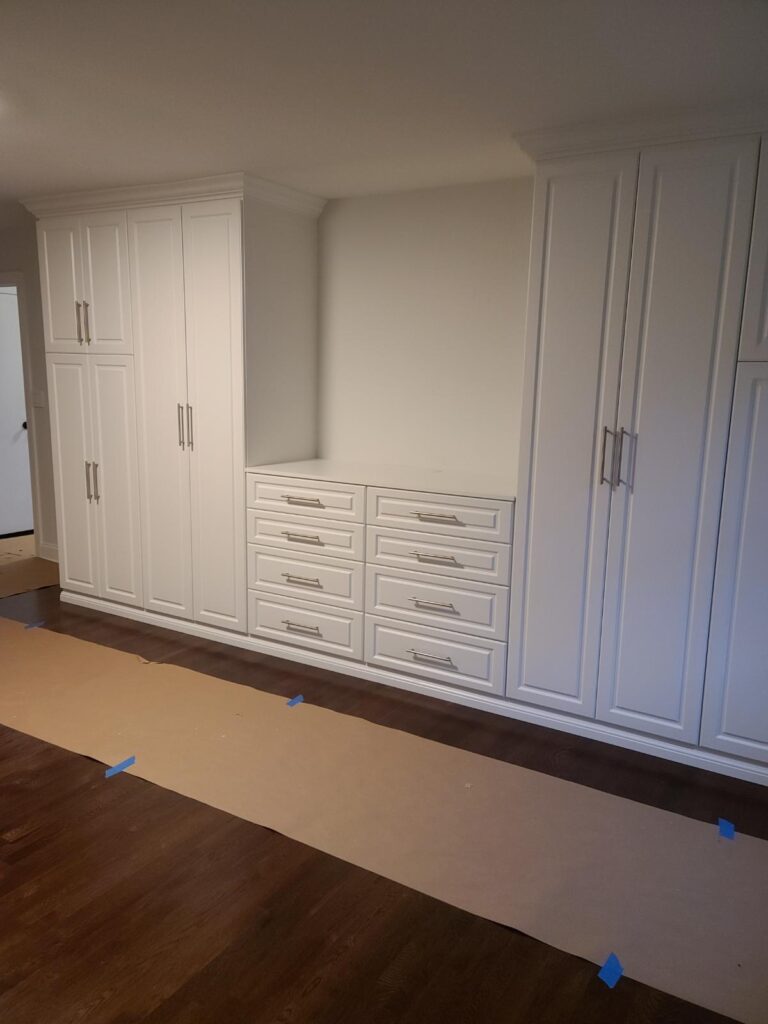
Take photos of your empty closet from multiple angles—these visual references become invaluable when planning your renovation and discussing options with contractors or designers.
Check walls for plumb and square using a level, as older homes often have settling issues that affect storage system installation and require professional accommodation during the renovation process.
Step-by-Step Closet Measuring Process
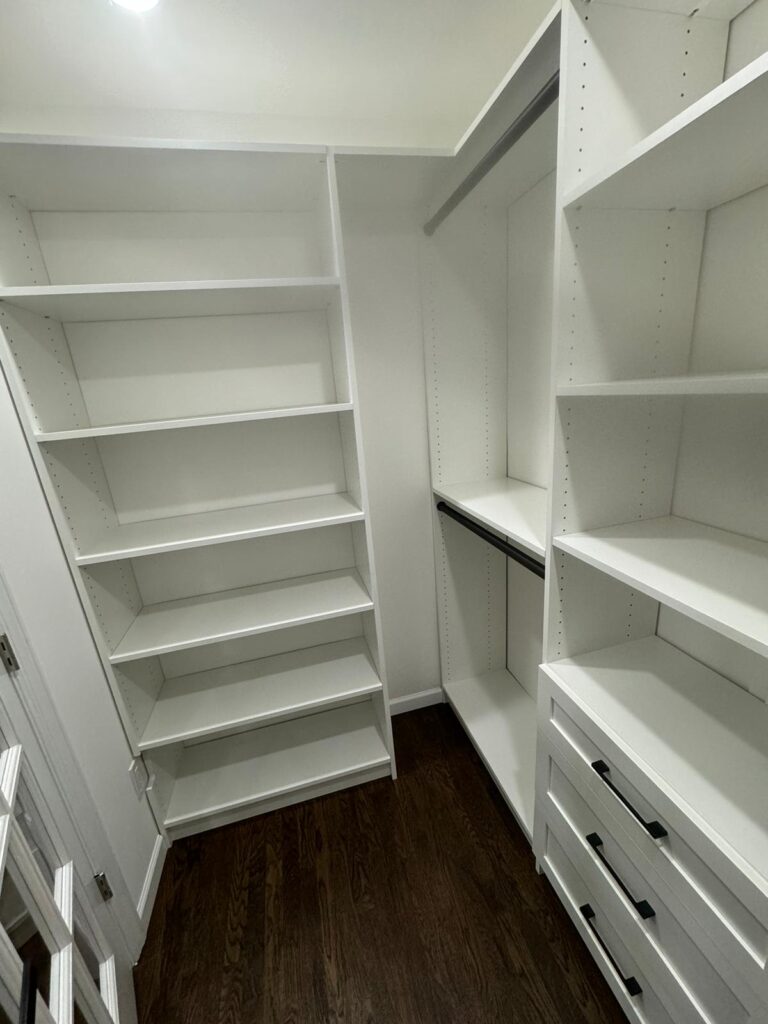
Measuring closet space requires systematic precision to ensure renovation success.
Start with overall dimensions: measure width, depth, and height at multiple points, as walls are rarely perfectly straight or ceilings perfectly level.
Record the narrowest measurements for each dimension—this ensures your renovation components will fit even in the tightest spots.
Measure from corner to corner diagonally to check if the space is square, noting any variations that require professional accommodation.
Document ceiling height variations, especially in older homes where floors may not be level or ceilings may slope.
Measure door openings carefully, including both the rough opening and finished opening dimensions—standard doors are 24, 30, 32, or 36 inches wide, but custom solutions may require different considerations.
Mark the location of all obstructions: electrical outlets (typically 12-18 inches from floor), light switches (usually 48 inches high), HVAC vents, water pipes, or structural elements that impact storage placement.
Create a rough sketch with all measurements labeled—this becomes your renovation blueprint and helps contractors provide accurate estimates for your project.
Measuring Different Closet Types and Configurations
Different closet configurations require specific measuring approaches to ensure your renovation delivers maximum storage efficiency and functionality.
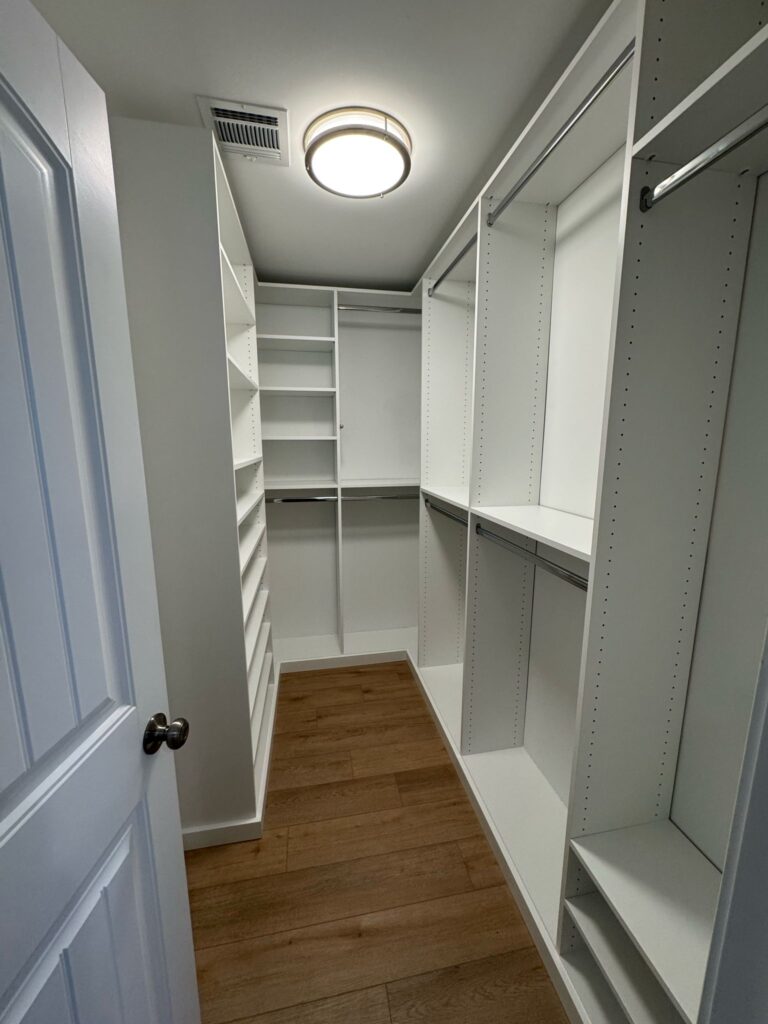
Walk-in closets require measuring the entire room perimeter, noting any architectural features like windows, built-in furniture, or angled walls that affect storage placement during renovation.
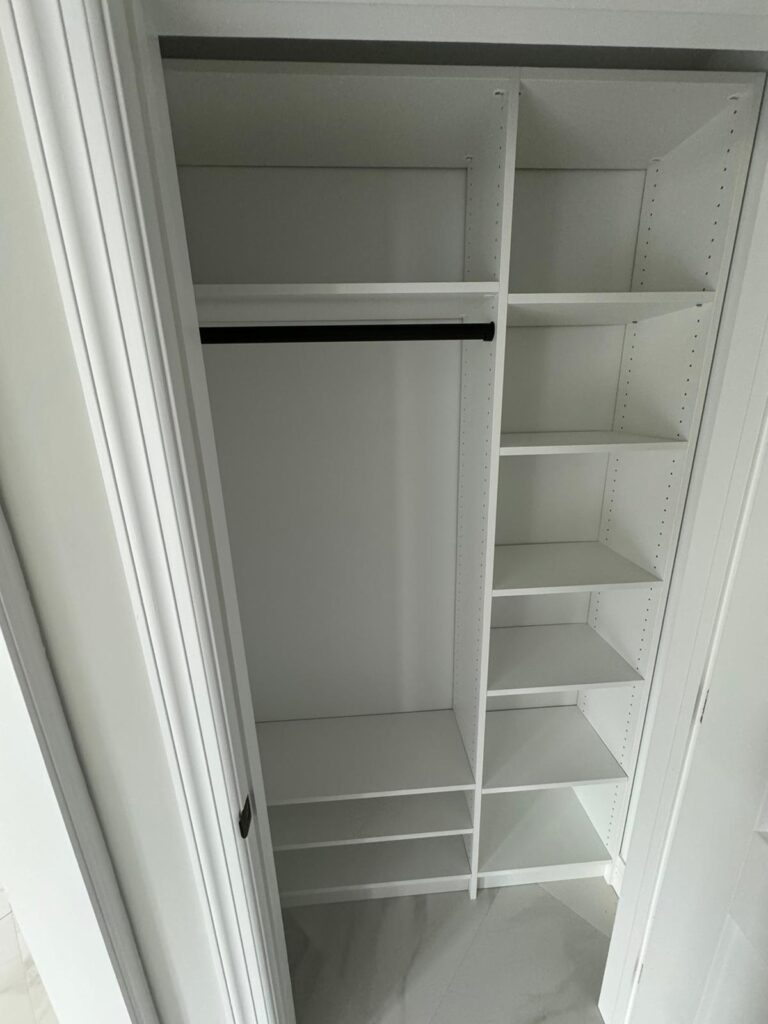
Reach-in closets need precise width and depth measurements, plus careful documentation of door track placement and any overhead storage opportunities for renovation planning.
Corner closets present unique measuring challenges—document both wall angles and the usable storage depth at various points to maximize the renovation potential of these often-underutilized spaces.
Common Measuring Mistakes That Cost Money Later
Measuring mistakes during renovation planning can cost thousands in wasted materials and installation delays.
The most expensive mistake: assuming walls are plumb and corners are square—this leads to gaps, uneven installations, and storage systems that don’t fit properly.
Forgetting to measure door swing clearances results in storage solutions that prevent doors from opening fully, requiring costly modifications after installation.
Overlooking electrical and plumbing locations leads to systems that block access to switches, outlets, or shut-off valves, creating safety and functionality issues.
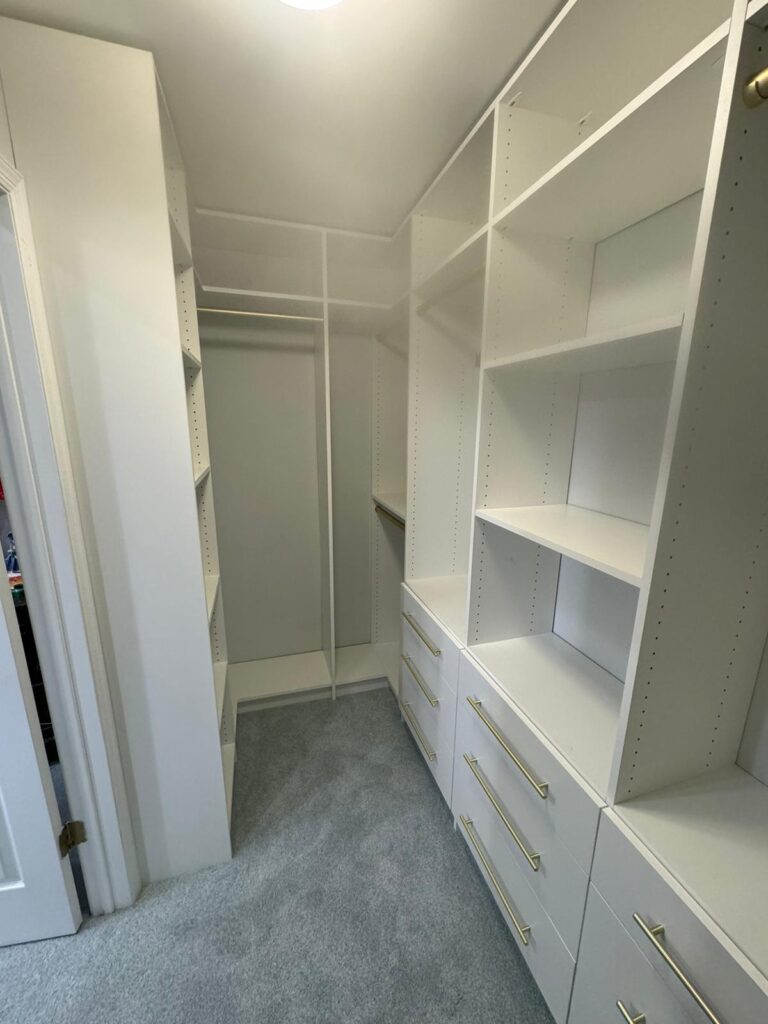
Many homeowners measure at one height only, missing the fact that walls narrow or widen at different elevations—professional measuring includes multiple height measurements to ensure proper renovation planning.
Failing to account for baseboards, crown molding, or other trim means storage systems won’t sit flush against walls, creating unsightly gaps and reducing storage efficiency.
Not measuring ceiling height variations in older homes can result in tall storage units that don’t fit, requiring expensive modifications or complete redesign of the renovation plan.
Planning Storage Solutions Based on Your Measurements
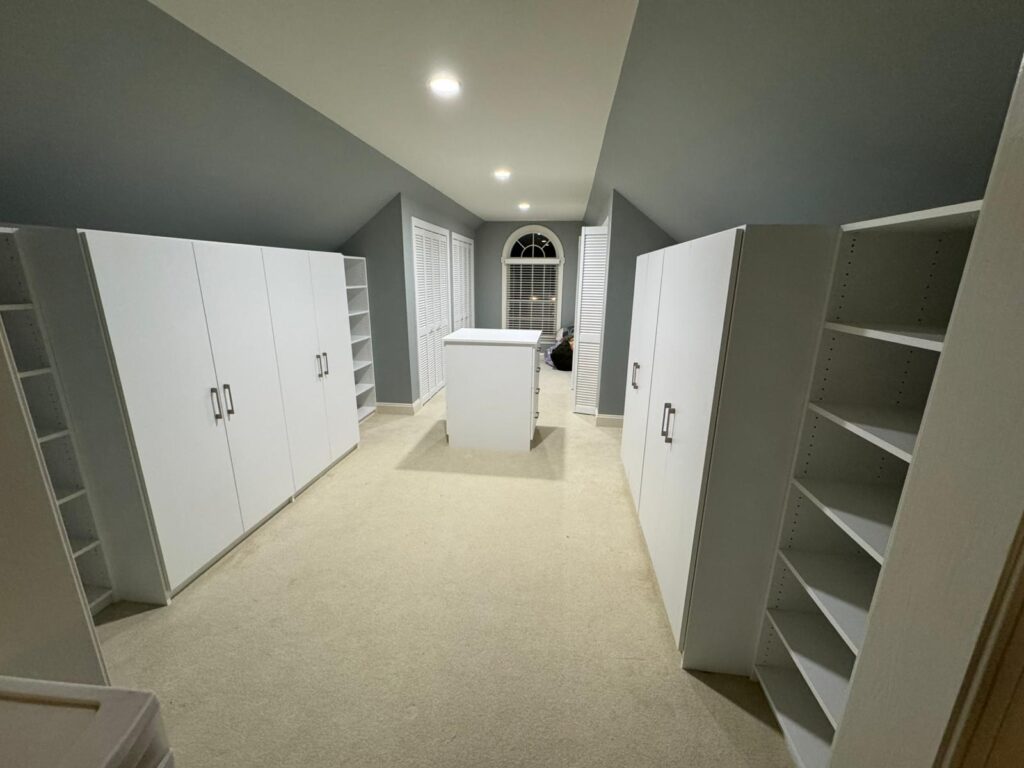
Accurate measurements enable strategic storage planning that maximizes every inch of your renovation investment.
Plan hanging rod heights based on your wardrobe: 84 inches for long dresses and coats, 42 inches for shirts and jackets, with adjustable options for changing needs.
Design shelf depths strategically: 12 inches for folded clothes, 14 inches for shoes, 16 inches for bulky items, and 24 inches for storage bins and seasonal items.
Calculate drawer quantities and sizes based on your inventory of smaller items—undergarments, ties, jewelry, and accessories require specific depth and width considerations.
Consider accessibility requirements in your renovation planning—frequently used items should be positioned between 24-72 inches high, while seasonal storage can utilize higher or lower areas.
Plan for future needs by incorporating adjustable components that can adapt as your storage requirements change over time—this maximizes your renovation investment’s longevity.
Factor in ventilation and lighting needs based on your measurements, ensuring proper air circulation and illumination for the storage solutions you’re planning.
When Professional Measuring Saves Time and Money
Professional measuring services often pay for themselves by preventing costly renovation mistakes and optimizing storage efficiency.
Coastal Closets’ 7-step process begins with precise professional measuring using laser tools and 3D scanning technology that captures details DIY measuring often misses.
Our vetted contractors identify structural issues, code compliance requirements, and installation challenges that affect renovation costs and timelines.
Professional measuring includes creating detailed CAD drawings and 3D renderings, allowing you to visualize the finished renovation before installation begins.
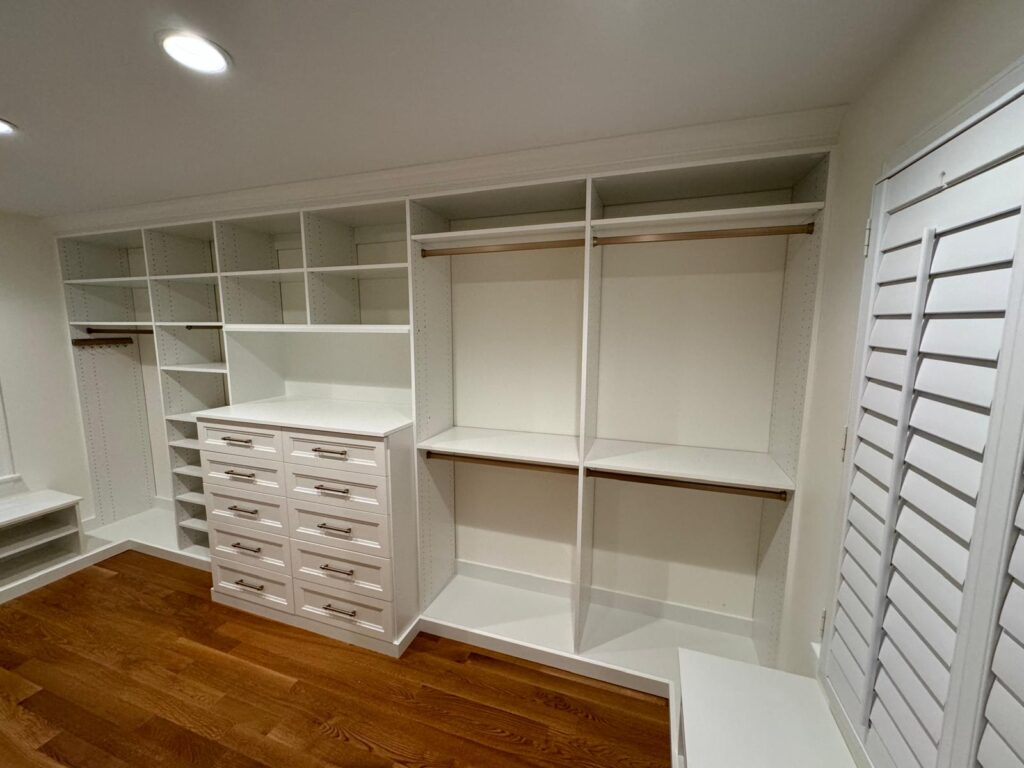
Complex spaces like walk-in closets with islands, angled walls, or integrated seating areas require professional measuring to ensure proper clearances and traffic flow patterns.
When renovation budgets exceed $3,000, professional measuring typically represents less than 2% of total project cost while preventing mistakes that could cost 20-30% in corrections and delays.
Professional services include material take-offs and installation planning that help contractors provide accurate bids and prevent change orders during your renovation project.
For homeowners in Essex, Bergen, Monmouth, or Ocean counties, professional measuring ensures your renovation complies with local building codes and homeowner association requirements.
Ready to Transform Your Measured Space?
Accurate measuring forms the foundation of every successful closet renovation, but turning those measurements into a functional, beautiful storage solution requires expertise, quality materials, and professional installation.
Coastal Closets combines professional measuring services with custom design and expert installation to deliver renovations that exceed expectations and add lasting value to your New Jersey home.
Our comprehensive approach ensures your closet renovation maximizes storage capacity, enhances daily functionality, and reflects your personal style—all backed by our proven 7-step process and limited lifetime warranty.