
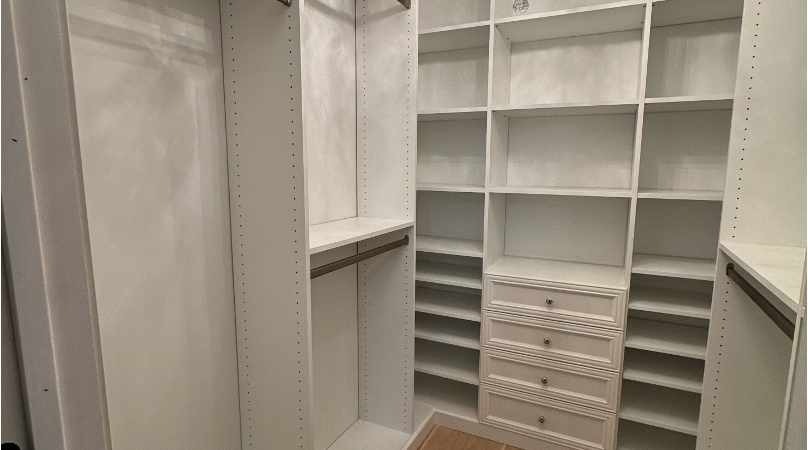
If your beautiful walk-in closet has become a source of daily frustration rather than morning inspiration, you’re not alone.
Many successful New Jersey homeowners find themselves spending precious time searching through cluttered spaces, despite investing in what should be their sanctuary of organization. Learning how to organize walk-in closet efficiently can transform this daily struggle into a seamless, enjoyable experience.
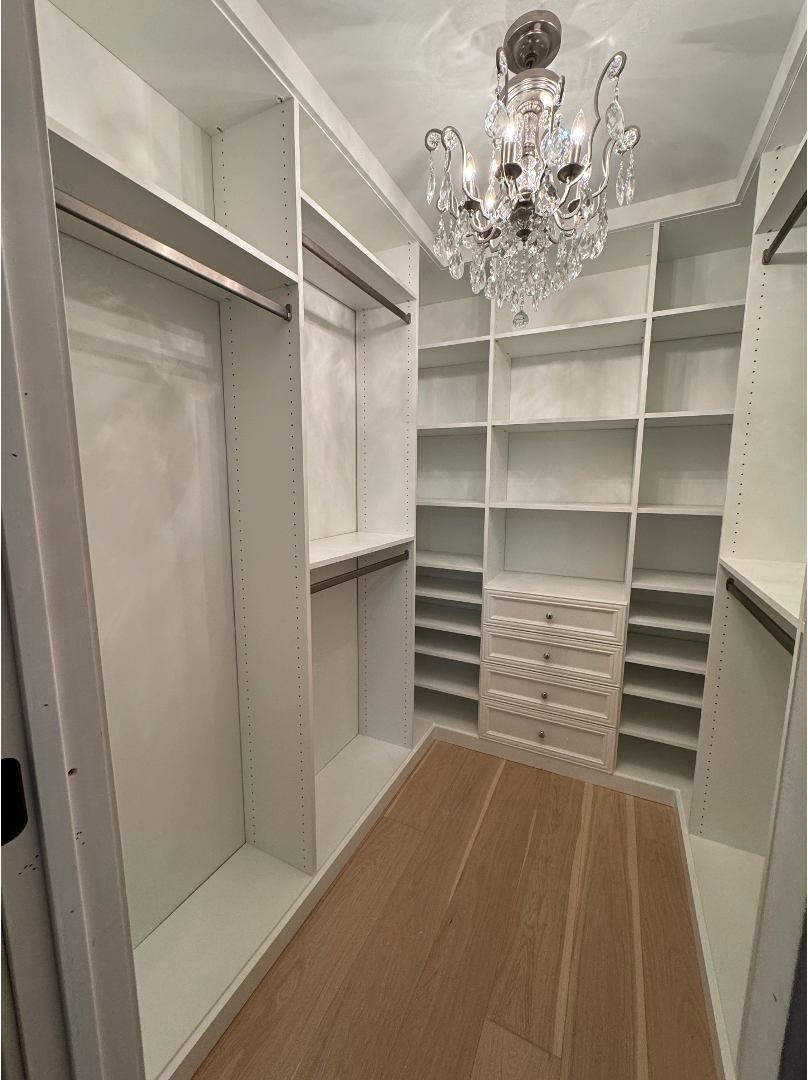
The truth about walk-in closet organization: it’s not about having more space—it’s about using your space intelligently.
At Coastal Closets, we’ve helped hundreds of New Jersey families transform chaotic walk-in closets into efficiently organized luxury spaces that actually save time and reduce stress.
✓ Professional Organization Systems
✓ Custom-Designed Solutions
✓ Vetted In-House Installation
✓ Lifetime Quality Guarantee
The Hidden Costs of Disorganized Walk-In Closets
Before diving into solutions, let’s acknowledge what disorganization really costs busy professionals and families.
Research shows the average person spends 12 minutes each morning searching for items—that’s over 73 hours per year lost to poor organization.
For successful New Jersey households, this translates to missed opportunities, increased stress, and the frustration of knowing your beautiful space isn’t serving its intended purpose.
The solution lies in understanding how to organize walk-in closet efficiently through proven systems that work with your lifestyle, not against it.
Step 1: Declutter and Assess Your Current Space
Start with a complete inventory system that successful organizers use worldwide.
Remove everything from your walk-in closet and sort items into four distinct categories: Keep, Donate, Store Elsewhere, and Needs Repair.
Professional tip: Use labeled containers or designated areas for each category to maintain clarity throughout the process.
This systematic approach, similar to what professional organizers use in high-end homes, ensures nothing gets overlooked or misplaced during the transformation process.
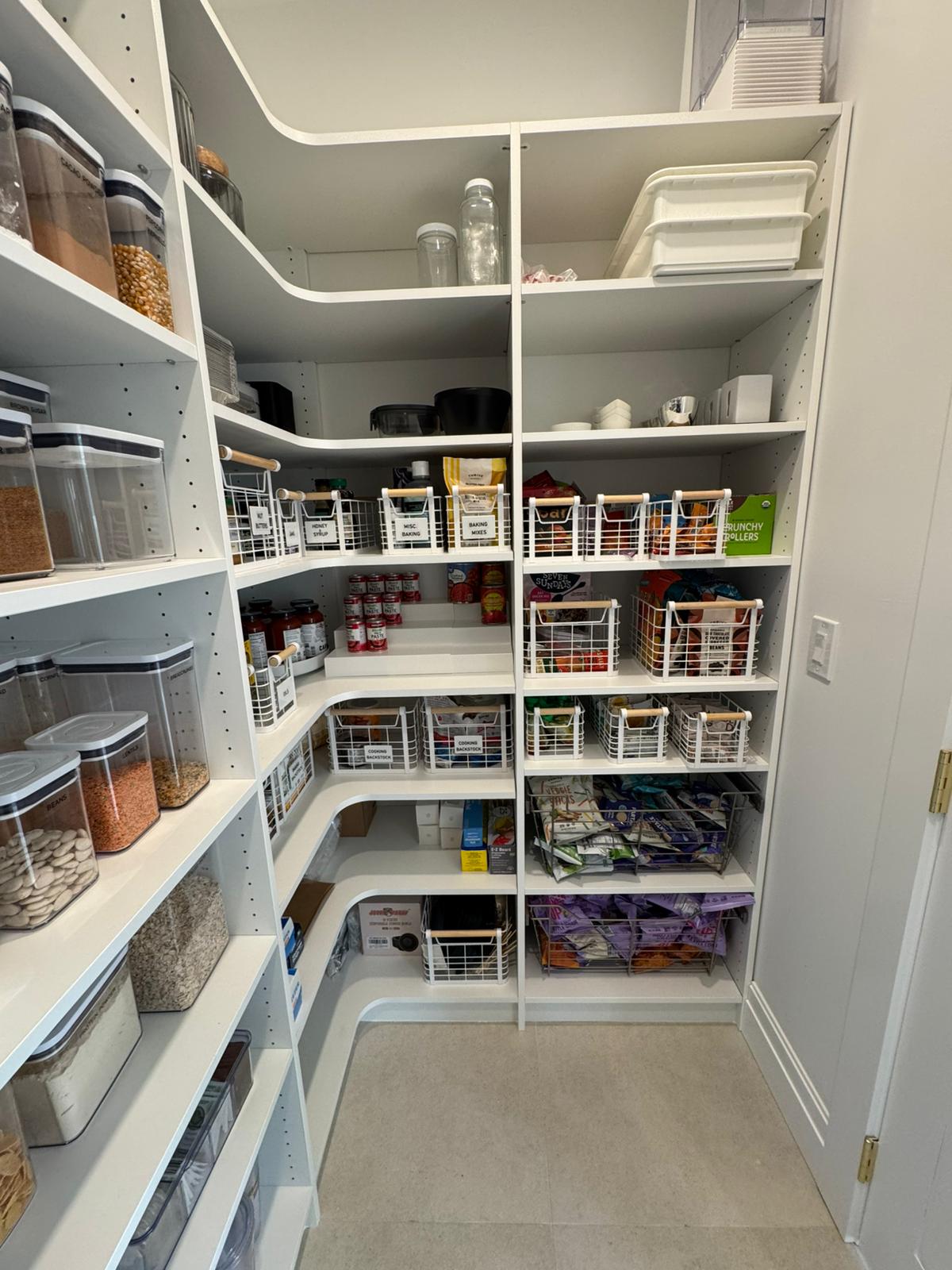
Professional Sorting Categories
The 80/20 Rule for Walk-In Closets: Most people wear 20% of their wardrobe 80% of the time.
Identify your most-worn pieces and ensure they’re positioned in prime real estate within your closet layout.
Seasonal items, special occasion wear, and rarely used accessories can be stored in less accessible areas without impacting daily functionality.
Step 2: Categorize and Group Similar Items
Effective categorization forms the foundation of how to organize walk-in closet efficiently and maintain that organization long-term.
Primary Categories for Professional Organization:
- Work Wardrobe: Suits, professional dresses, blazers, dress shirts
- Casual Wear: Weekend clothes, activewear, loungewear
- Special Occasion: Evening wear, formal events, seasonal celebrations
- Accessories: Handbags, jewelry, belts, scarves
- Shoes: Work shoes, casual shoes, athletic shoes, special occasion
Color Coordination System
Within each category, organize by color gradients—this creates visual harmony and makes outfit selection intuitive even during busy mornings.
Professional organizers recommend the ROYGBIV system (Red, Orange, Yellow, Green, Blue, Indigo, Violet) followed by neutrals (black, brown, gray, white) for consistent, visually pleasing results.
Professional Organization Inspiration
Before implementing your organization system, gain inspiration from professionally designed spaces that demonstrate optimal efficiency and aesthetic appeal.
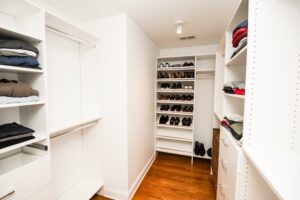
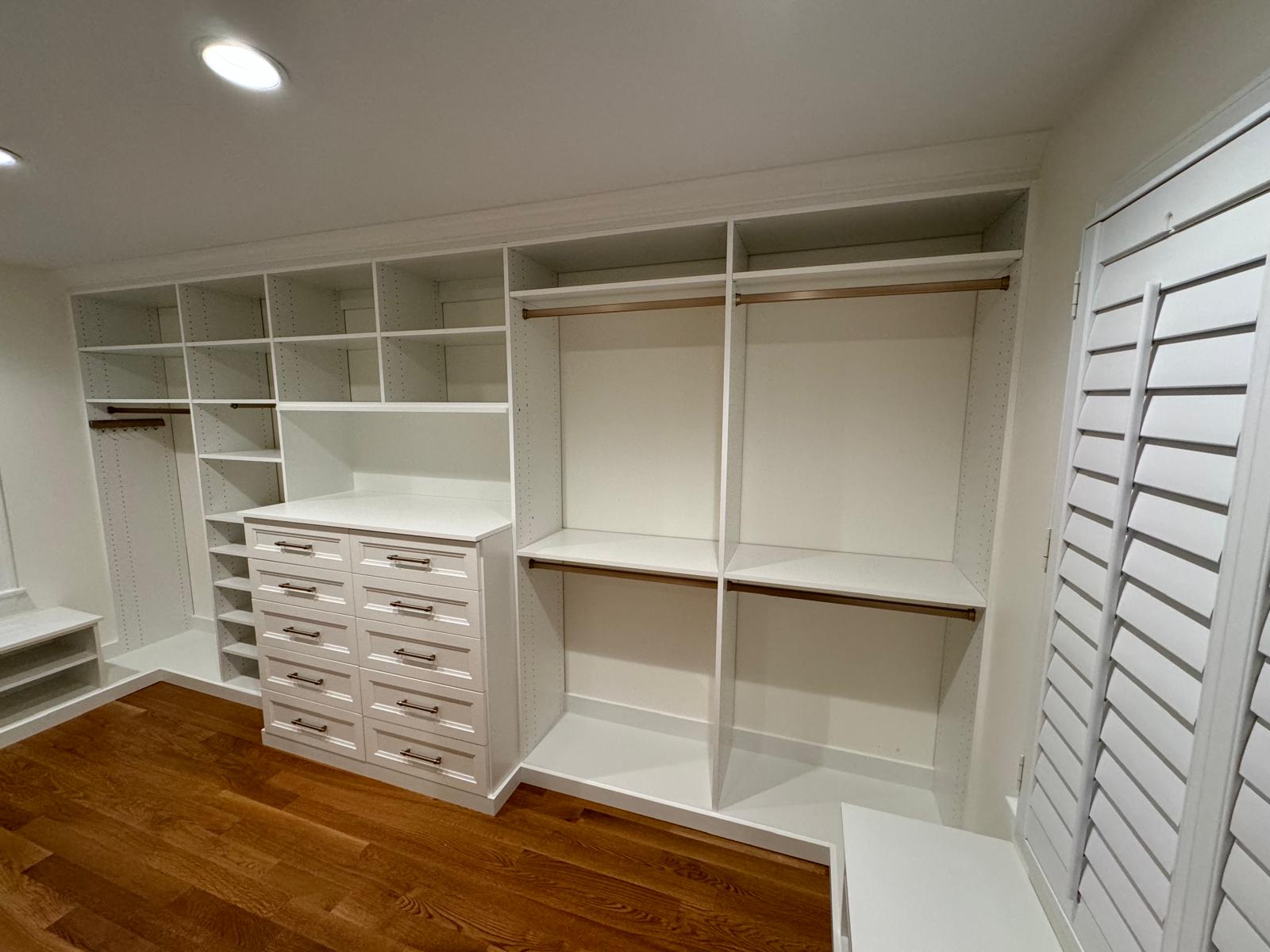
These professionally designed systems demonstrate key principles: dedicated zones for different items, maximum vertical space utilization, and strategic placement of frequently used items at eye level and arm’s reach.
Step 3: Implement Smart Storage Solutions
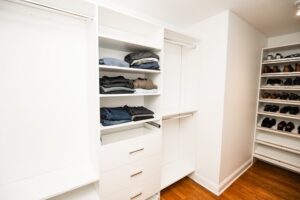
Pull-out drawers revolutionize accessibility and visibility in walk-in closets.
Unlike traditional fixed shelving, pull-out systems allow you to see and access items stored in the back without disturbing front items.
This solution works particularly well for undergarments, socks, ties, and small accessories that tend to create clutter in standard shelf systems.
Professional advantage: Premium materials and soft-close drawer systems maintain quiet operation and prevent slamming that can disturb sleeping family members during early morning routines.
Vertical Space Optimization Strategies:
- Double Hanging Rods: Maximize hanging space for shorter items like blouses and folded pants
- Adjustable Shelving: Accommodate changing wardrobe needs and seasonal storage requirements
- Corner Solutions: Utilize often-wasted corner space with specialized rotating systems or angled shelving
- Overhead Storage: Store seasonal items, luggage, and rarely used pieces in upper areas
The key to understanding how to organize walk-in closet efficiently lies in creating systems where every item has a designated place that makes sense for your daily routines.
Step 4: Create Dedicated Zones for Different Items
Zone-based organization mirrors the layout principles used in luxury boutiques and high-end retail spaces, creating an intuitive shopping experience within your own closet.
The Professional Work Zone: Position business attire at eye level and within easy reach, typically on the left side as you enter the closet.
This zone should include dedicated space for suits, blazers, dress shirts, and professional accessories, organized by color and frequency of use.
The Casual Living Zone: Designate the right side or back area for weekend wear, athletic clothing, and loungewear.
This placement allows easy access for non-work days while keeping professional items pristine and wrinkle-free.
The Accessory Central Zone: Create a dedicated area, often the center of the closet, for handbags, jewelry, belts, and scarves.
This central placement allows easy coordination with outfits from both work and casual zones.
Step 5: Optimize Shoe and Accessory Storage
Shoe organization can make or break your entire closet system’s functionality.
Professional organizers recommend storing shoes at or below eye level, with daily-wear pairs positioned for easiest access.
Slanted shelving, as shown here, allows you to see each pair instantly while maximizing vertical storage capacity.
Storage hierarchy: Work shoes at eye level, casual shoes at mid-level, special occasion and seasonal shoes on upper and lower shelves.

Accessory Organization Systems:
- Handbag Storage: Open shelving allows bags to maintain their shape while remaining visible and accessible
- Jewelry Organization: Velvet-lined drawers with compartments prevent tangling and protect delicate pieces
- Belt and Scarf Storage: Pull-out racks or specialized hooks keep these items visible and wrinkle-free
- Watch and Sunglasses Display: Dedicated small drawers or display cases protect expensive accessories while showcasing collections
Maintaining Your Organized Walk-In Closet
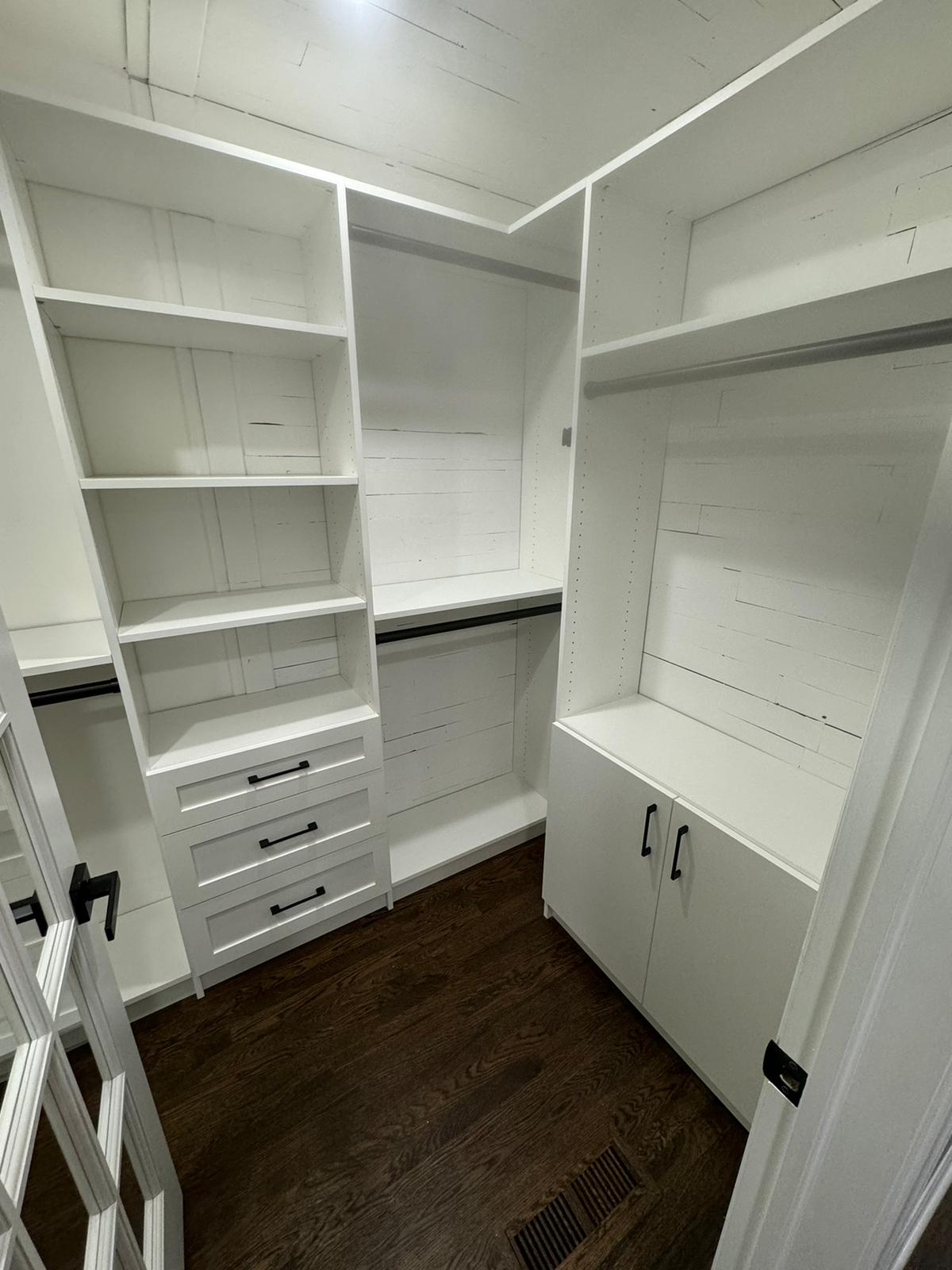
Long-term organization success depends on systems that support your natural habits, not fight against them.
This professionally designed system includes built-in features that make maintenance effortless: designated spaces for every item type, sufficient storage for growth, and logical placement patterns.
The 10-minute daily rule: Spend 10 minutes each evening returning items to their designated spaces—this prevents accumulation and maintains organization effortlessly.
Professional systems like this one include features specifically designed for easy maintenance and long-term organization success.
Seasonal Maintenance Schedule:
- Monthly: Assess and purge items that haven’t been worn, donate pieces that no longer fit your lifestyle
- Seasonally: Rotate seasonal items, moving current season pieces to prime locations
- Annually: Complete inventory review, assess system effectiveness, and upgrade components as needed
The most successful walk-in closet organization systems evolve with your changing needs, accommodating career transitions, lifestyle changes, and growing collections.
Why Professional Organization Systems Outperform DIY Solutions
While understanding how to organize walk-in closet efficiently provides valuable insights, there’s a significant difference between knowing principles and implementing systems that deliver long-term results.
Professional Advantages You Can’t DIY:
- Custom Measurements: Professional systems are cut to your exact specifications, maximizing every inch of available space
- Premium Materials: Commercial-grade premium materials support extensive wardrobes without sagging or structural failure
- Integrated Lighting: Properly positioned LED systems illuminate every area without shadows or harsh lighting
- Specialized Features: Pull-out hampers, built-in ironing boards, jewelry drawers with felt lining, and other luxury touches
At Coastal Closets, our 7-step process ensures your organization system works seamlessly with your daily routines while accommodating future changes in your wardrobe and lifestyle needs.
Our vetted, in-house contractors understand the unique storage challenges facing New Jersey homeowners, from seasonal climate considerations to the space constraints common in older homes. We use only premium materials and hardware that maintain their functionality and appearance for decades.
Ready to Transform Your Walk-In Closet?
Implementing these professional organization principles will dramatically improve your walk-in closet’s functionality and your daily routine’s efficiency.
However, the most successful transformations combine smart organization principles with custom-designed systems that work specifically for your space, lifestyle, and storage needs.
Coastal Closets has helped hundreds of New Jersey families create walk-in closets that not only look beautiful but function flawlessly for years to come.
Our custom solutions address the unique challenges of New Jersey homes while incorporating premium materials, luxury finishes, and thoughtful details that make your closet a joy to use every single day.
Ready to discover how your walk-in closet could work better for your busy lifestyle?