
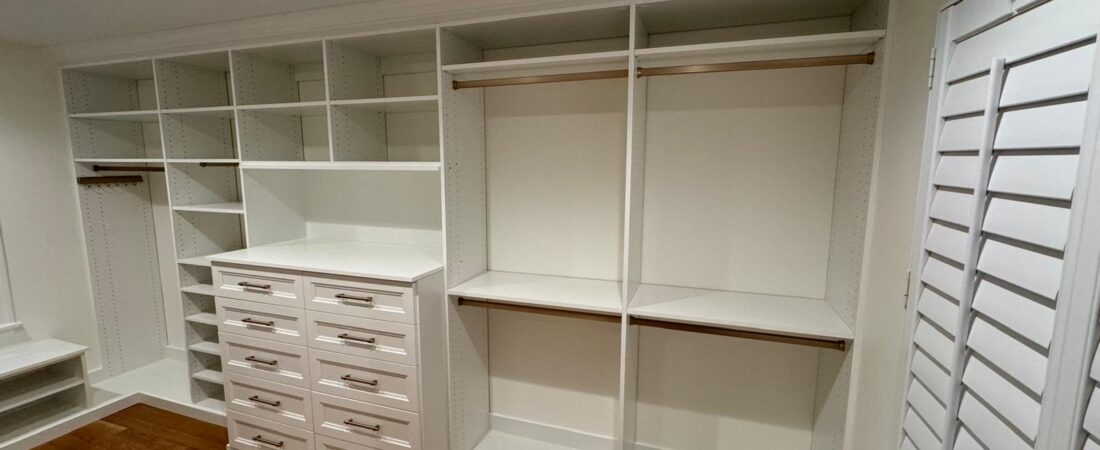
Planning your dream walk-in closet starts with one crucial step: accurate measurements.
Whether you’re renovating your master bedroom in Bergen County or transforming a spare room in Monmouth County, precise measurements form the foundation of effective storage planning that maximizes every square inch.
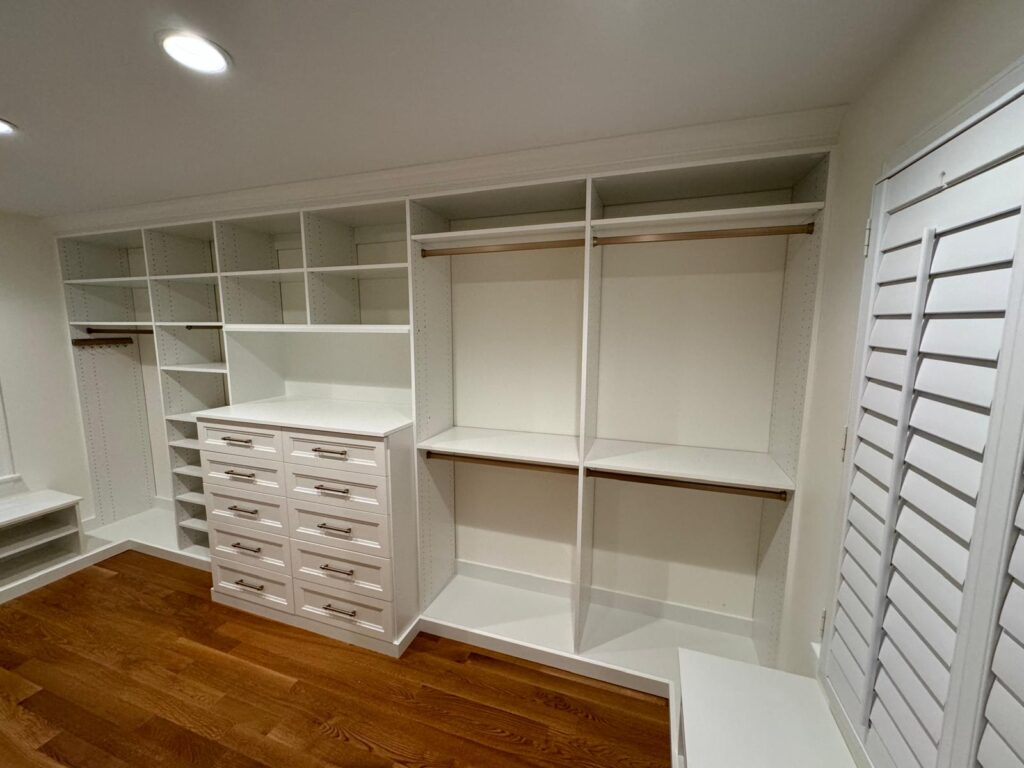
Professional measurement is the difference between a closet that works beautifully and one that leaves you frustrated daily.
At Coastal Closets, proper measurement is the first step in our proven 7-step process for creating custom storage solutions throughout New Jersey.
✓ Precise measurements guaranteed
✓ Custom design consultation included
✓ Vetted in-house contractors
✓ Premium materials and finishes
Why Accurate Walk-In Closet Measurements Matter
Poor measurements lead to costly mistakes that haunt homeowners for years.
Inaccurate dimensions result in wasted space, awkward gaps, components that don’t fit, and storage solutions that fail to meet your daily needs.
Professional measurement ensures every inch serves a purpose, maximizing both storage capacity and visual appeal while preventing expensive do-overs.
Essential Tools for Accurate Closet Measurements
Before you begin measuring, gather these essential tools for professional-quality results:
Measuring tape: Use a 25-foot steel tape measure for accuracy and stability over longer distances.
Laser measure: Digital laser tools provide precise measurements and reduce human error, especially for height calculations.
Level: A 4-foot level helps identify uneven floors and walls that affect installation.
Graph paper: Create scaled drawings to visualize your measurements and plan storage layouts.
Smartphone camera: Document unusual angles, obstacles, and existing features for reference.
Understanding Different Walk-In Closet Configurations
Walk-in closet measurements vary significantly based on layout and size.
Understanding your specific configuration helps determine the most effective measurement approach and identifies potential challenges before you begin.
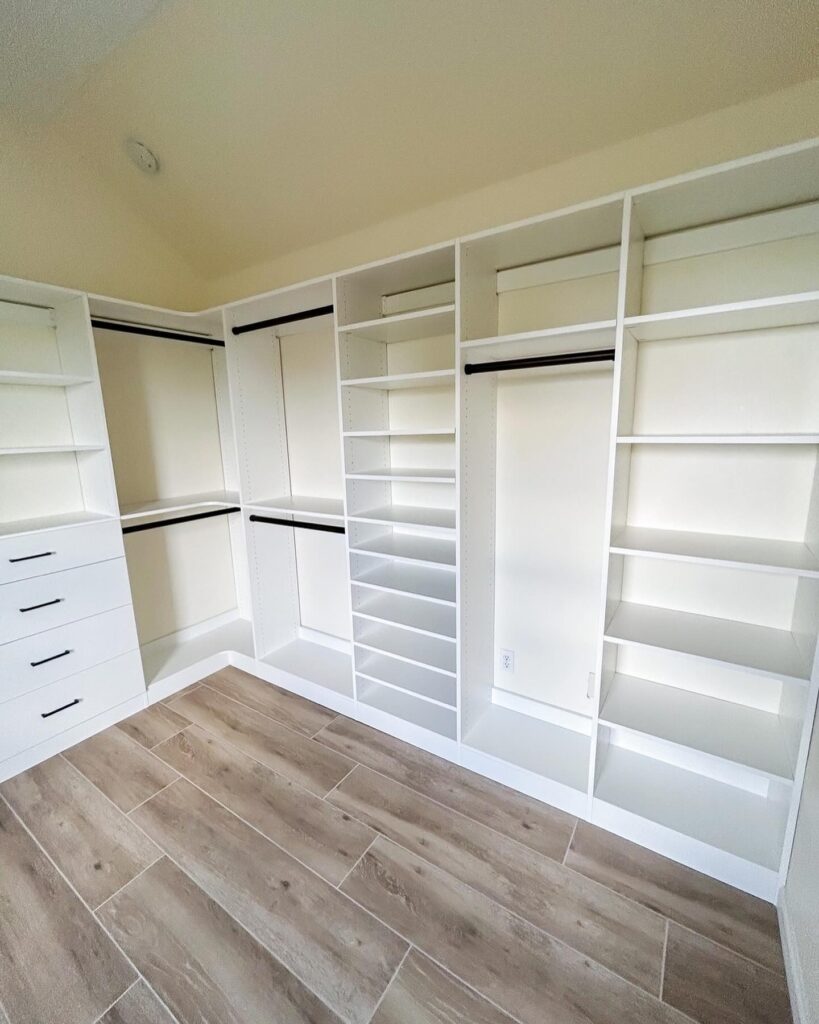
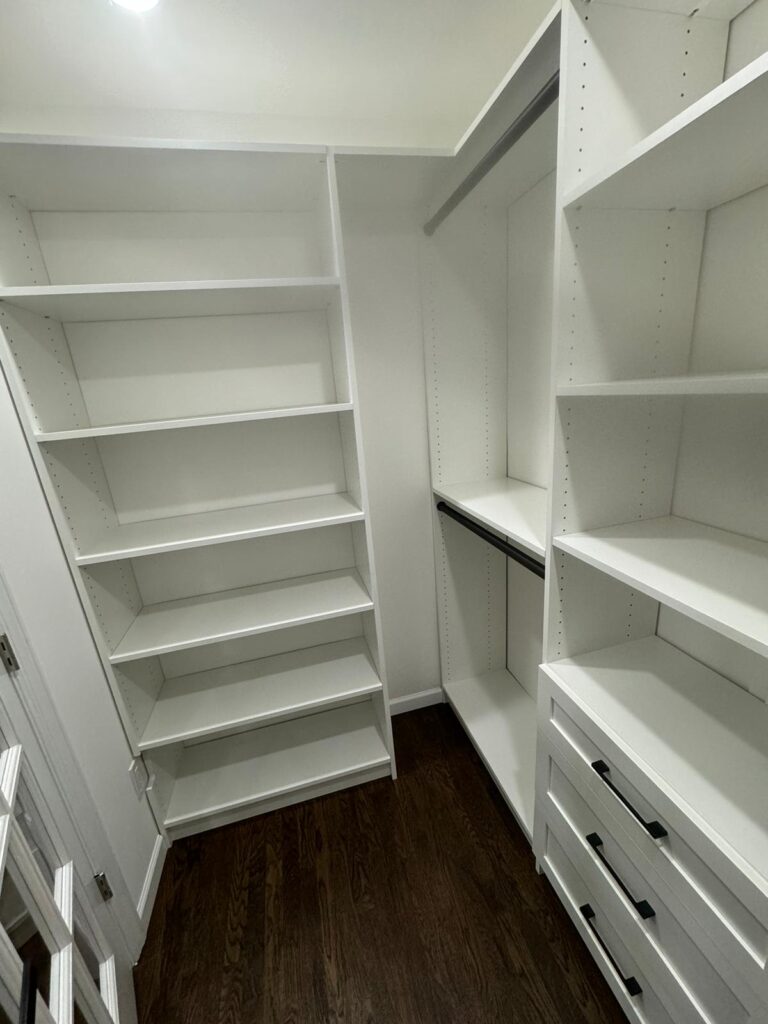
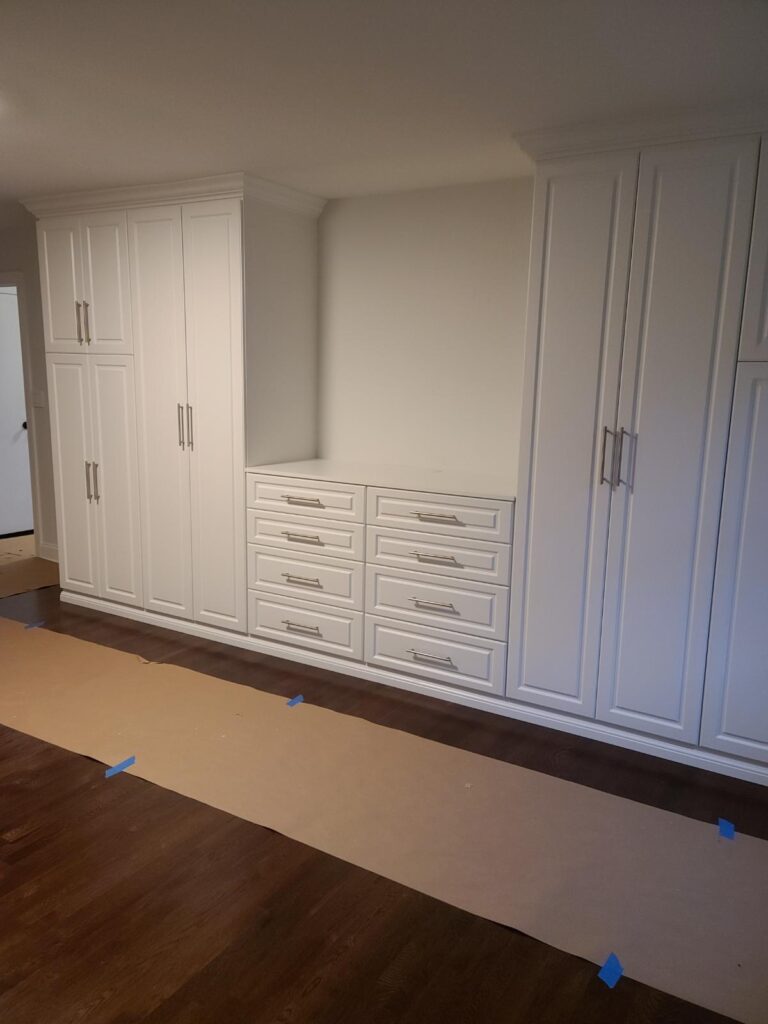
Large walk-in closets (8×8 feet or larger) require systematic measurement of multiple wall sections and careful documentation of traffic flow patterns.
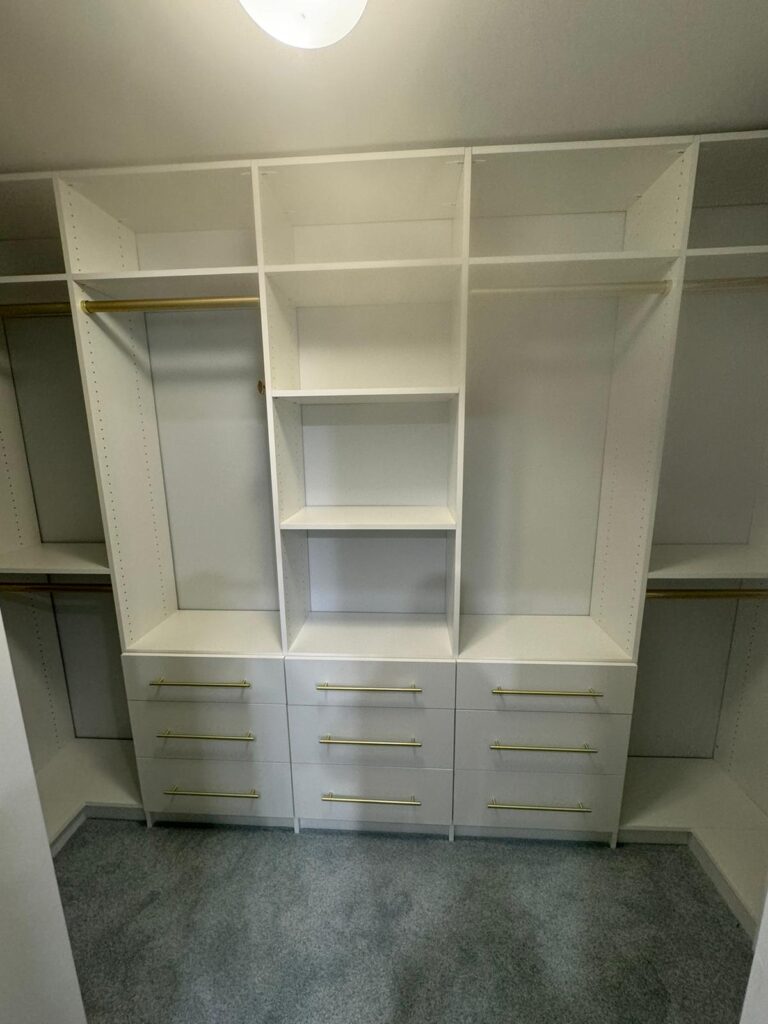
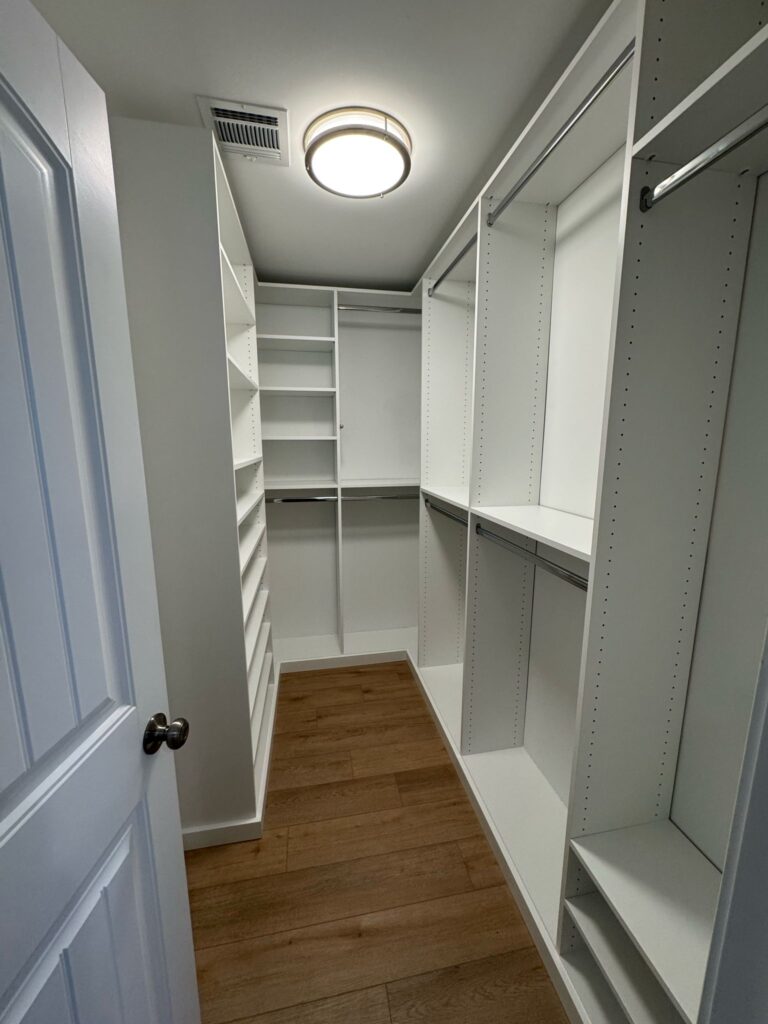
Compact walk-in closets (5×7 to 7×8 feet) demand precise measurements to maximize limited space and ensure comfortable access to all storage areas.
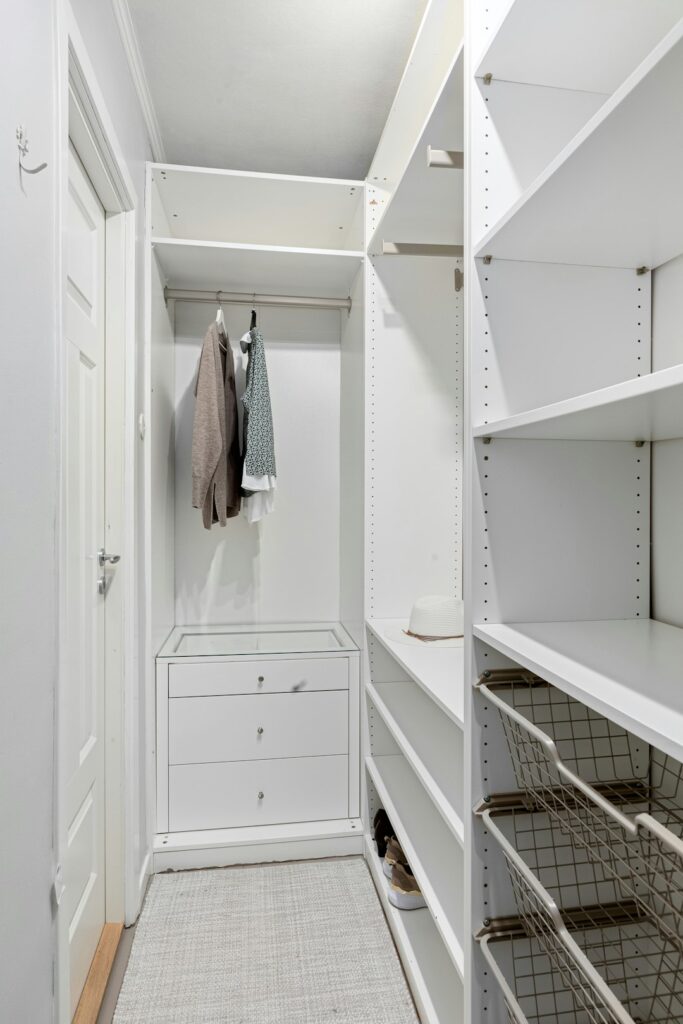
Linear walk-in closets (long and narrow) need special attention to depth measurements and turning radius calculations for optimal functionality.
Step-by-Step Walk-In Closet Measurement Process
Step 1: Measure Overall Room Dimensions
Start with the big picture before focusing on details.
Measure the length and width of your closet space at floor level, recording dimensions to the nearest 1/8 inch.
Check measurements at multiple points along each wall, as older homes often have variations that affect installation.
Record ceiling height at several locations, noting any slope or variation that impacts vertical storage planning.
Step 2: Document Wall-by-Wall Measurements
Measure each wall individually, starting from the same corner and moving clockwise around the room.
Record exact wall lengths, noting any irregularities, protrusions, or recessed areas that affect storage placement.
Mark the location and dimensions of all electrical outlets, switches, and fixtures that impact system design.
Step 3: Measure Doors and Windows
Document the width, height, and exact location of entry doors, measuring from wall corners to door frames.
Note door swing direction and clearance requirements, as this affects traffic flow and storage accessibility.
Measure any windows, including sill height and trim dimensions that impact wall-mounted storage.
Step 4: Identify and Measure Obstacles
Document HVAC vents, ductwork, plumbing, and structural elements that cannot be relocated.
Measure the exact location and dimensions of any built-in features, architectural details, or existing fixtures.
Note floor transitions, raised platforms, or level changes that affect installation methods.
Step 5: Check for Square and Level
Verify that corners are square using the 3-4-5 triangle method or a large carpenter’s square.
Check walls for plumb using a level, noting any significant deviations that require compensation during installation.
Measure floor level variations, as uneven floors affect system stability and require adjustment during planning.
Common Measurement Mistakes That Cost You Storage
Ignoring Electrical and HVAC
• Measuring around outlets instead of noting exact locations
• Forgetting to account for vent clearances
• Missing light switch placement
• Overlooking ceiling fixtures
Assuming Walls Are Straight
• Taking only one measurement per wall
• Not checking for bow or curve
• Ignoring corner variations
• Skipping plumb verification
Rounding Measurements
• Using nearest inch instead of 1/8 inch
• Guessing at hard-to-reach dimensions
• Approximating ceiling heights
• Estimating instead of measuring
Forgetting Door Clearances
• Not measuring door swing radius
• Missing trim and casing dimensions
• Ignoring handle clearance needs
• Overlooking access requirements
These measurement errors lead to costly reinstallation, reduced storage capacity, and systems that don’t function as intended.
Professional measurement eliminates these risks while ensuring optimal use of every available inch.
Measuring Corner Spaces and Awkward Areas
Corner spaces and awkward areas require special measurement techniques to maximize storage potential.
L-shaped corners: Measure each wall separately, then calculate the interior corner angle to ensure proper system alignment.
Sloped ceilings: Take height measurements at multiple points, noting the angle of slope for custom shelving adjustments.
Angled walls: Use a protractor or angle finder to document exact angles, as standard storage systems require modification.
Under-stair areas: Measure headroom at various depths to determine usable storage zones and access limitations.
These challenging spaces often provide the most dramatic storage improvements when properly measured and designed.
Professional designers excel at transforming awkward areas into highly functional storage zones that seamlessly integrate with your overall closet system.
Creating Accurate Floor Plans and Sketches
Transform your measurements into visual plans that guide decision-making and prevent costly errors.
Scale drawings: Use graph paper with a consistent scale (1/4 inch = 1 foot) to create proportional room layouts.
Multiple views: Draw floor plans, wall elevations, and cross-sections to fully understand your space’s three-dimensional characteristics.
Detail callouts: Mark specific measurements, obstacles, and special features that affect storage placement and accessibility.
Digital tools: Consider using smartphone apps or simple CAD programs for more precise drawings and easy modifications.
Why Professional Measurement Ensures Perfect Results
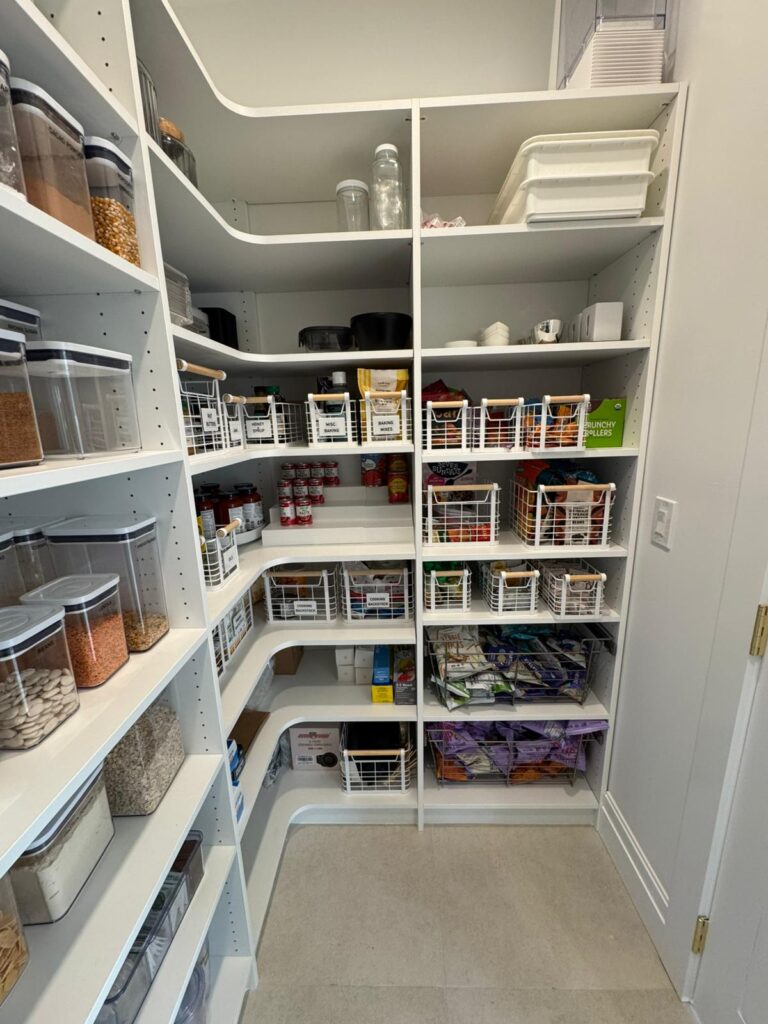
Professional measurement is an investment that pays dividends for decades.
Coastal Closets’ experienced designers bring specialized tools, proven techniques, and years of experience to ensure perfect fit and optimal functionality.
Advanced tools: Professional-grade laser measures, digital levels, and 3D scanning technology provide accuracy impossible with household tools.
Design expertise: Our team recognizes potential issues and opportunities that untrained eyes miss, maximizing storage potential.
Installation preparation: Professional measurements account for installation requirements, ensuring smooth project execution.
Warranty protection: Professional measurement is included in our comprehensive project warranty, protecting your investment.
The Coastal Closets Measurement Advantage
Our vetted in-house contractors follow a systematic measurement protocol that eliminates errors and ensures perfect fit.
This professional approach is why Coastal Closets has become New Jersey’s trusted choice for custom storage solutions that exceed expectations.
Every measurement session includes design consultation, helping you visualize possibilities and make informed decisions about your investment.
Ready to Transform Your Walk-In Closet?
Accurate measurement is just the beginning of creating your perfect walk-in closet.
While these measurement techniques provide a solid foundation for planning, nothing replaces the expertise and precision of professional measurement and design.
Coastal Closets combines accurate measurement with innovative design and quality craftsmanship to create storage solutions that transform your daily routine.
Our comprehensive approach ensures your closet not only fits perfectly but functions beautifully for years to come.